Cybersicherheit und Rollenwandel
- 1 June 2018
- Schünemann, Wolf J.; Harnisch, Sebastian; Artmann, Stefan
- DE
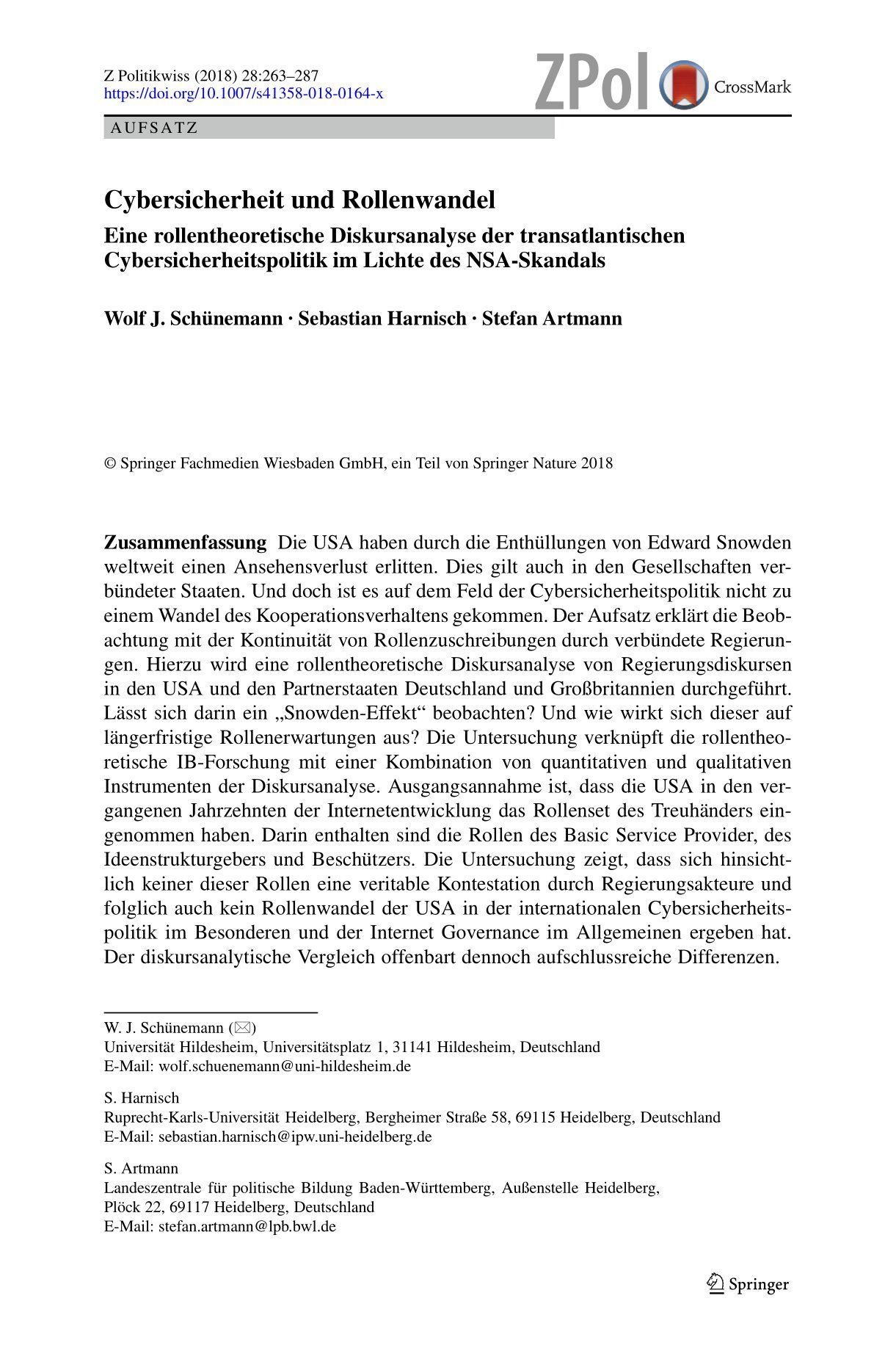
The US’ loss of reputation due to the Snowden-revelations did not lead to a change in cooperative behaviour in cybersecurity politics. This article explains this by pointing out the continuity in role attribution by allied governments and thereby links role theoretical IR-research with quantitative and qualitative instruments from discourse analysis. The US, as “basic service provider”, “idea-structure provider”, and “protector”, have adopted the role-set of a “custodian” during the decades of the evolution of the internet. This paper shows that these roles never saw veritable contestation by government actors. Hence, no change in the US’ role in international cybersecurity politics and internet governance took place.
More external publications
- Research and Analysis

16.09.2026
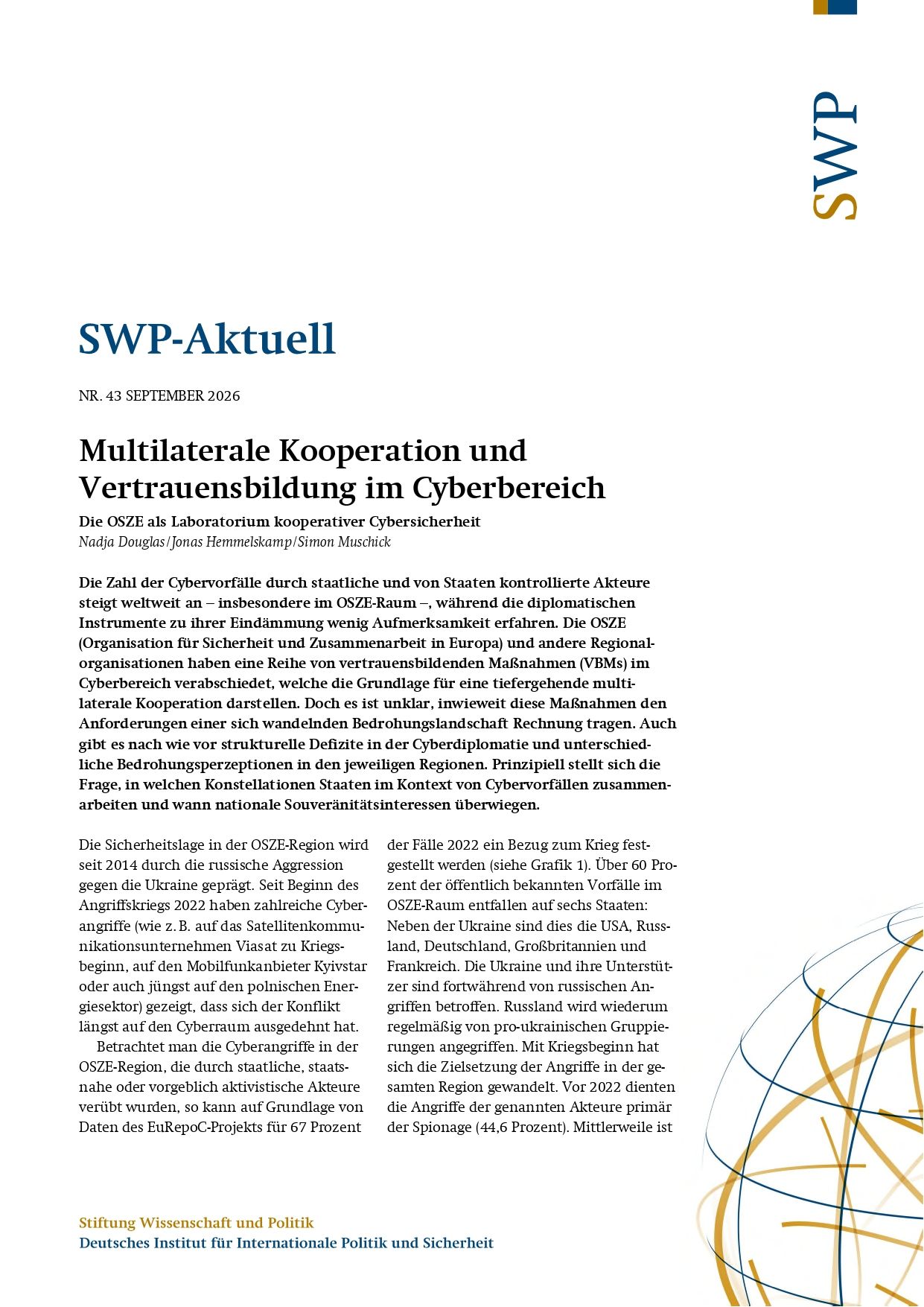
In this article, Jonas Hemmelskamp, Nadja Douglas, and Simon Muschick examine how the OSCE can serve as a forum for cyber diplomacy and confidence-building despite geopolitical tensions.

24.08.2026
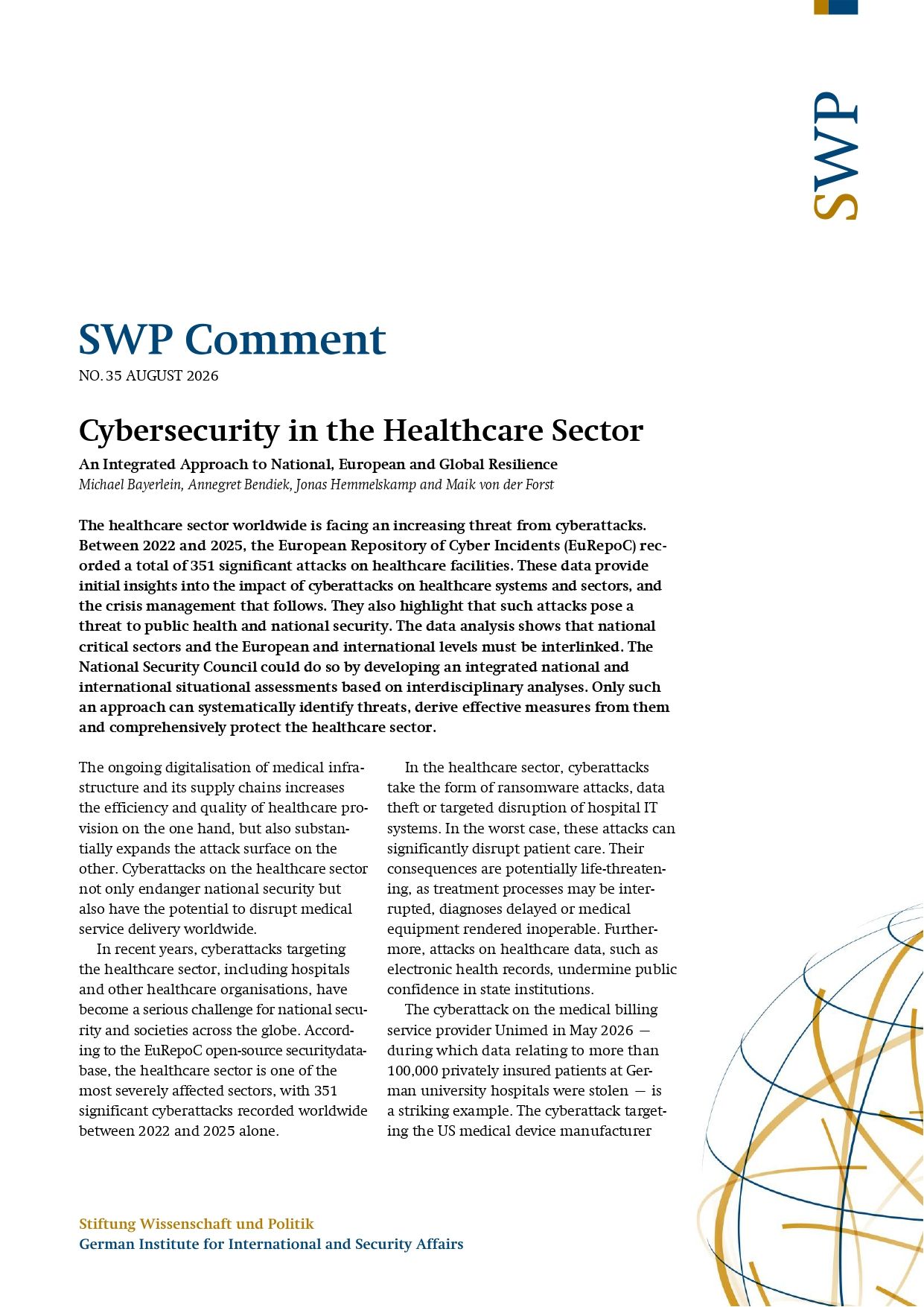
In this publication, Annegret Bendiek, Jonas Hemmelskamp, Michael Bayerlein, and Maik von der Forst analyse the current state of the healthcare sector as a target of malicious cyber activities on the national, European, and global levels.

26 June 2025
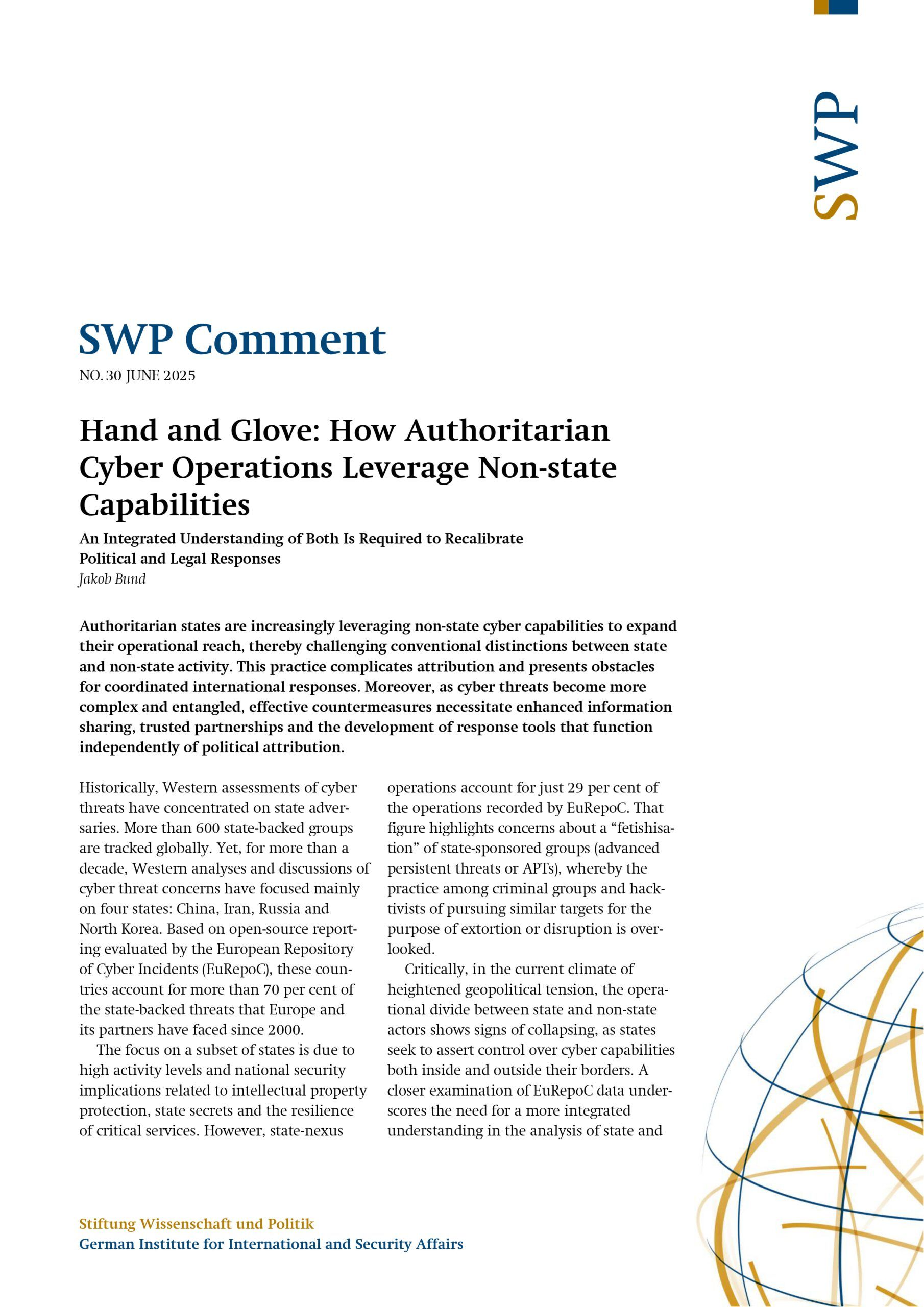
In this article, Jakob Bund examines how authoritarian states like Russia, China, and North Korea increasingly harness non-state cyber actors to expand their capabilities, blur attribution, and complicate global responses. He argues that this growing fusion of state and criminal or contractor activity demands integrated threat assessments and response tools that can operate independently of political attribution.