Zum Inhalt springen

Cybersecurity and extraterritorial obligations of states

The Routledge Handbook on Extraterritorial Human Rights Obligations brings international scholarship on transnational human rights obligations into a comprehensive and wide-ranging volume.

Each chapter combines a thorough analysis of a particular issue area and provides a forward-looking perspective of how extraterritorial human rights obligations (ETOs) might come to be more fully recognized, outlining shortcomings but also best state practices. It builds insights gained from state practice to identify gaps in the literature and points to future avenues of inquiry. The Handbook is organized into seven thematic parts: conceptualization and theoretical foundations; enforcement; migration and refugee protection; financial assistance and sanctions; finance, investment and trade; peace and security; and environment. Chapters summarize the cutting edge of current knowledge on key topics as leading experts critically reflect on ETOs, and, where appropriate, engage with the Maastricht Principles to critically evaluate their value 10 years after their adoption.

The Routledge Handbook on Extraterritorial Human Rights Obligations is an authoritative and essential reference text for scholars and students of human rights and human rights law, and more broadly, of international law and international relations as well as to those working in international economic law, development studies, peace and conflict studies, environmental law and migration.

Mehr Publikationen

  • Research and Analysis
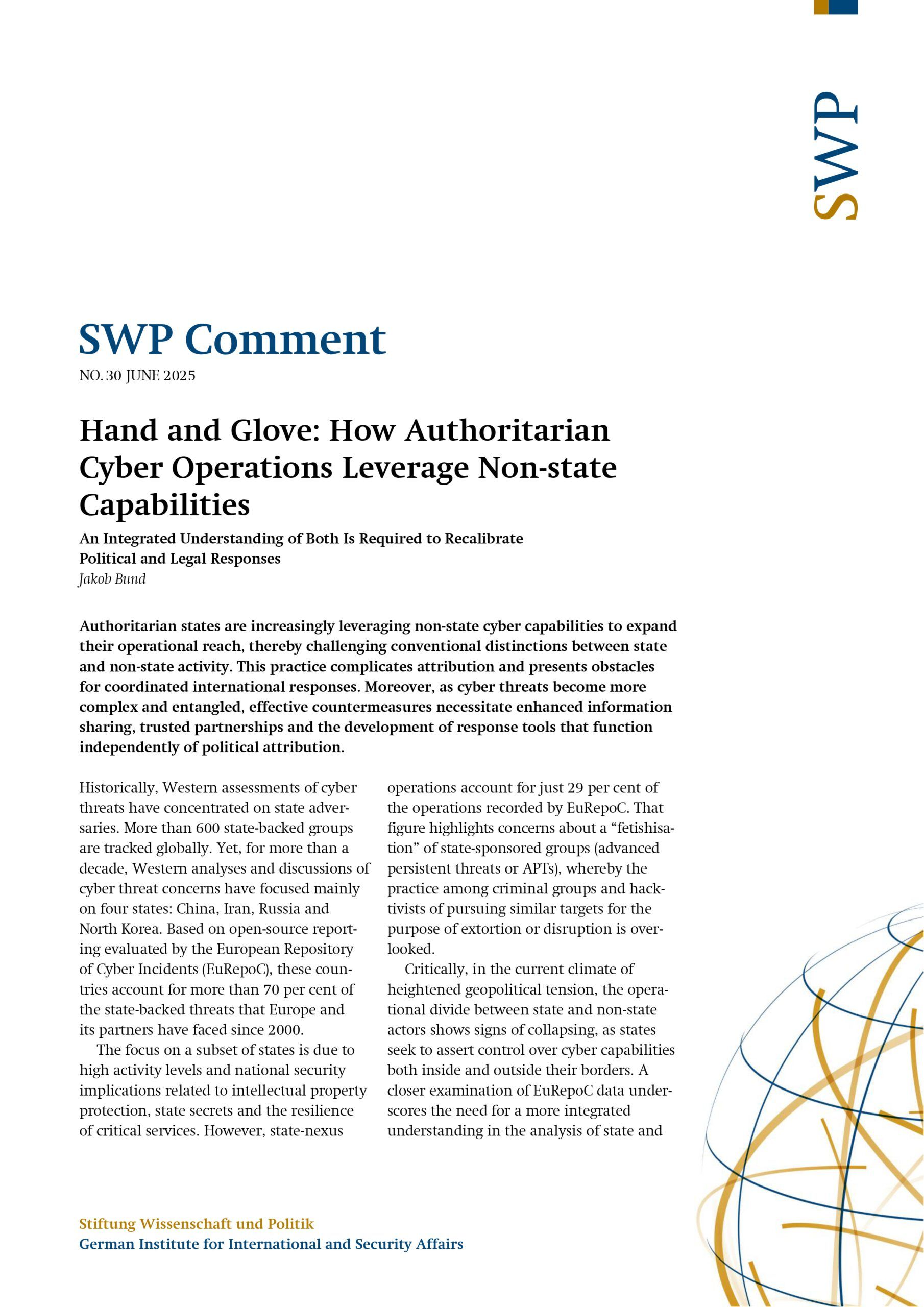
Hand and Glove: How Authoritarian Cyber Operations Leverage Non-state Capabilities

26. Juni 2025
In diesem Artikel untersucht Jakob Bund, wie autoritäre Staaten wie Russland, China und Nordkorea zunehmend nichtstaatliche Cyberakteure nutzen, um ihre Fähigkeiten auszubauen, die Zuordnung von Verantwortung zu verschleiern und globale Reaktionen zu erschweren. Er argumentiert, dass diese zunehmende Verschmelzung von staatlichen und kriminellen oder Auftragnehmeraktivitäten integrierte Bedrohungsanalysen und Reaktionsinstrumente erfordert, die unabhängig von politischen Zuordnungen funktionieren können.
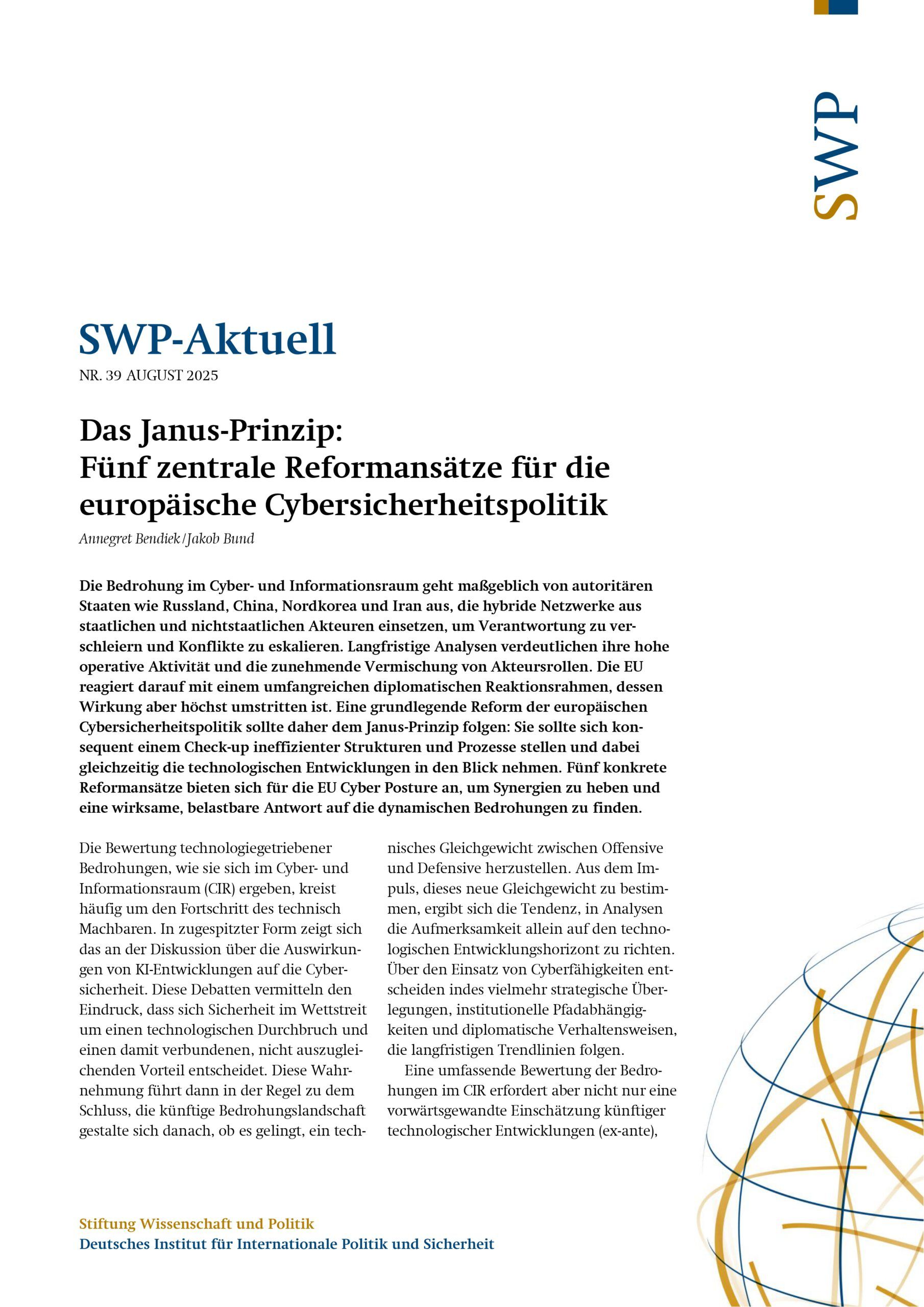
Das Janus-Prinzip: Fünf zentrale Reformansätze für die europäische Cybersicherheitspolitik

22. August 2025
In diesem Artikel analysieren Annegret Bendiek und Jakob Bund, wie autoritäre Staaten hybride staatliche/nichtstaatliche Netzwerke nutzen, um Europa durch Verschleierung von Verantwortlichkeiten und Eskalation von Konflikten herauszufordern. Bendiek und Bund argumentieren, dass die EU ihre Cybersicherheitspolitik nach einem „Janus-Prinzip“ reformieren muss, um Resilienz, Koordination und strategische Wirksamkeit zu stärken.

Welcome to our Cyber Incident Dashboard!

For best results, please view on a desktop device.